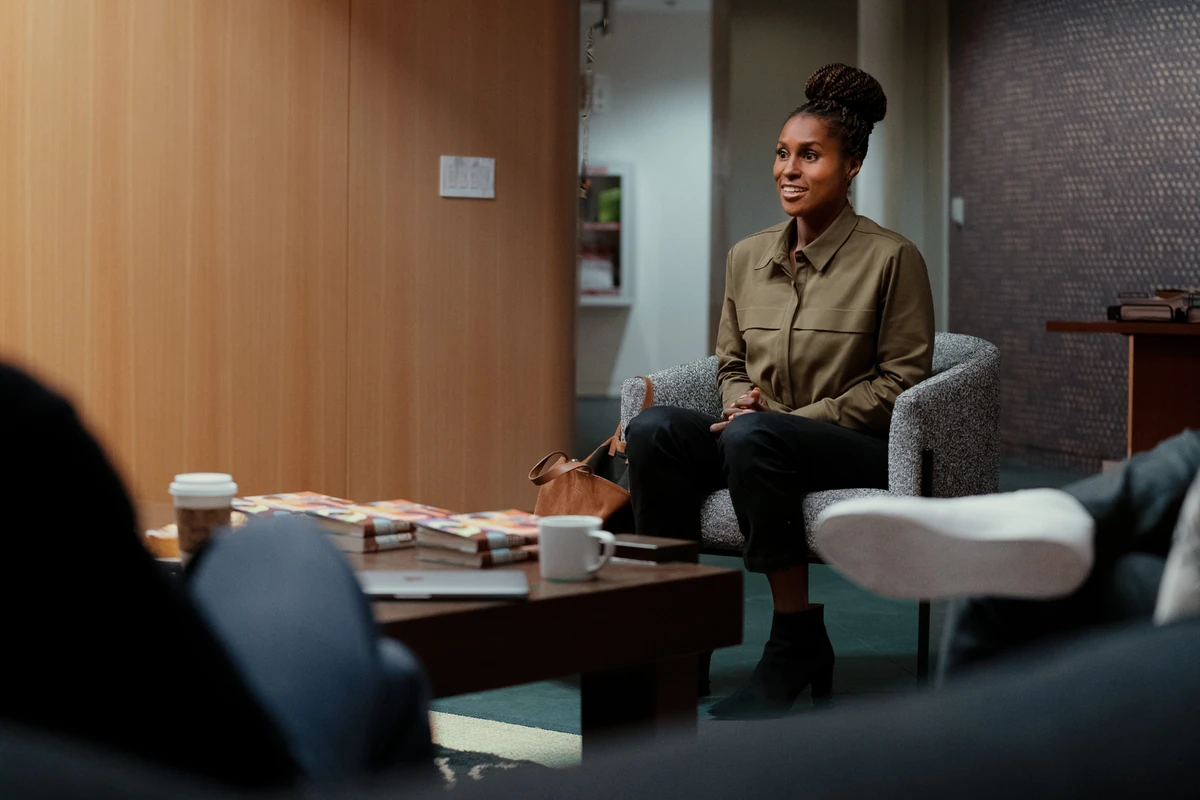
If you’ve spent any time scrolling through Apple TV+, you probably stumbled across an anthology series called Roar. It’s weird. It’s colorful. Honestly, it’s a bit jarring at times. But there’s one specific episode that people cannot stop googling: Roar: The Woman Who Disappeared.
It stars Issa Rae. She plays Wanda Shepard, a successful author who heads to Los Angeles because a big-shot production company wants to turn her memoir into a movie. Sounds like a dream, right? Except, as soon as she steps into the room, things get surreal. She starts literally fading away. Not just metaphorically—though the metaphor is doing some heavy lifting here—but physically vanishing from the sight of the white producers in the room.
What actually happens in Roar: The Woman Who Disappeared?
The plot is deceptively simple. Wanda arrives at this ultra-sleek, minimalist office. She’s there to talk about her book, The Disappearing Act. The irony is almost too on the nose. As the meeting progresses, the producers (played by Nick Kroll and Griffin Matthews) start talking over her. They talk about her while she’s sitting right there.
They love her "story." They love her "struggle." But they don't seem to see her.
Every time they ignore her or rephrase her own life experiences to make them more "marketable," Wanda loses a bit of her physical presence. First, it’s just a glitch. Then, she’s a ghost. By the time they are debating the color of the posters, she’s invisible.
The episode is based on a short story by Cecelia Ahern, from her 2018 collection also titled Roar. While the book has thirty stories, the TV adaptation narrowed it down to eight. This specific installment, directed by Channing Godfrey Peoples, takes the abstract feeling of being marginalized and turns it into a literal horror-comedy.
Why the "Invisibility" metaphor is so accurate
Let’s be real. If you’ve ever been the only person of color, or the only woman, or just the "outsider" in a high-stakes corporate meeting, you’ve felt this. It’s that skin-crawling sensation where you say something brilliant, no one acknowledges it, and then a guy named Dave says the exact same thing thirty seconds later and gets a round of applause.
In Roar: The Woman Who Disappeared, this isn't just a social faux pas. It’s a survival threat.
The brilliance of Issa Rae’s performance is in the subtlety. She doesn’t start out screaming. She tries to be polite. She tries to "play the game." She adjusts her posture. She smiles. But the more she accommodates their narrow vision of who she should be, the faster she vanishes. It’s a biting critique of "performative diversity" in Hollywood and beyond.
The producers want the trauma of her life because it sells tickets. They don't actually want the person who lived it.
The VR headset scene is a masterpiece of cringe
There is a moment in the episode where the producers put on VR headsets to "experience" Wanda’s world. They are literally looking at a digital recreation of her life while she is standing three feet away from them, screaming for attention.
They can’t see her because they are too busy consuming the "content" of her life.
It perfectly captures the 2020s obsession with "empathy" that doesn't actually require talking to real people. It’s easier to watch a documentary or put on a headset than it is to actually listen to the woman standing in front of you.
Breaking down the ending: Does she stay gone?
A lot of people finish the episode and ask: "Wait, did she actually die?"
Not exactly.
The ending of Roar: The Woman Who Disappeared is more about reclamation than a physical return to "normal." Wanda realizes that as long as she stays in that room, trying to fit into their box, she will remain invisible. She has to leave. She has to exist on her own terms.
The final moments see her walking out. She’s still not fully "there" to the world that refused to see her, but she’s reclaiming her voice. It’s a bittersweet ending. It doesn't pretend that the world suddenly woke up and became enlightened. Instead, it suggests that the only way to stop disappearing is to stop seeking validation from people who aren't looking at you in the first place.
The difference between the book and the show
In Cecelia Ahern's original story, the tone is a bit more whimsical, almost like a dark fairy tale. The TV show, however, grounds it in the very specific reality of the Black female experience in professional spaces.
The show’s creators, Liz Flahive and Carly Mensch (the duo behind GLOW), leaned heavily into the "social thriller" vibe. They used the source material as a skeleton but put a lot of contemporary meat on the bones. If you read the book after watching the show, you might be surprised by how different the "vibe" is, even if the core concept of a woman vanishing remains.
Key themes that make this episode relevant in 2026
We are still talking about this episode years after its release because the "invisible woman" trope has only become more relevant. In an era of AI-generated content and hyper-curated social media identities, the fear of being "erased" or replaced by a more "marketable" version of yourself is peak anxiety.
- Tokenism: The episode shows that being "invited to the table" means nothing if you aren't allowed to speak.
- The Male Gaze vs. The Corporate Gaze: It’s not just about how men see women, but how systems see individuals as assets rather than humans.
- Voice Reclamation: The journey from silence to "Roaring" (as the series title suggests).
Honestly, the pacing of this episode is intentionally frustrating. It makes you feel the claustrophobia of that office. It makes you want to yell at the screen. That’s the point. If you felt uncomfortable watching it, the creators did their job.
What to watch (or read) after Roar
If the themes in Roar: The Woman Who Disappeared resonated with you, there are a few other pieces of media that hit that same "speculative social commentary" sweet spot.
- The Other Black Girl (Hulu/Book): This is basically the spiritual cousin to this episode. It deals with office politics, racial tension, and a creeping sense of horror that something is very wrong in the workplace.
- Swarm (Amazon Prime): Also starring/produced by creative forces like Donald Glover and Janine Nabers, it explores the darker side of identity and obsession.
- American Fiction (Film): This movie tackles the exact same theme—how the industry wants "Black stories" to look a certain way—but through a satirical comedy lens.
Actionable insights for navigating "Invisibility"
If you’ve found yourself googling this episode because you feel like you’re disappearing in your own life or career, here are a few things to keep in mind.
- Audit your "rooms": If you are in a space where you constantly have to diminish yourself to fit in, you are eventually going to vanish. Look for environments where your "resolution" stays at 100%.
- Document your value: In the episode, Wanda’s memoir was her power. Don't let others narrate your story. Keep a "win log" or a record of your contributions so they can't be attributed to the "Daves" of the world.
- Find your "Sightline" peers: Surround yourself with people who actually see you. In the series, the women who are "roaring" are often the ones who find community with others who have faced similar erasures.
The reality is that Roar: The Woman Who Disappeared isn't just a sci-fi story. It’s a documentary wrapped in a neon-lit, Apple TV+ aesthetic. It serves as a stark reminder that our visibility is often tied to our refusal to stay quiet.
Next Steps for Deep Diving into Roar:
- Watch Episode 1 first: While the series is an anthology, starting with "The Woman Who Disappeared" sets the tone for the magical realism used throughout the rest of the season.
- Compare the source material: Pick up Cecelia Ahern’s Roar to see how the original thirty stories differ from the eight selected for the screen.
- Check out the "The Woman Who Kept Eerie Records" episode: It’s a great companion piece that explores identity through the lens of memory and personal history.