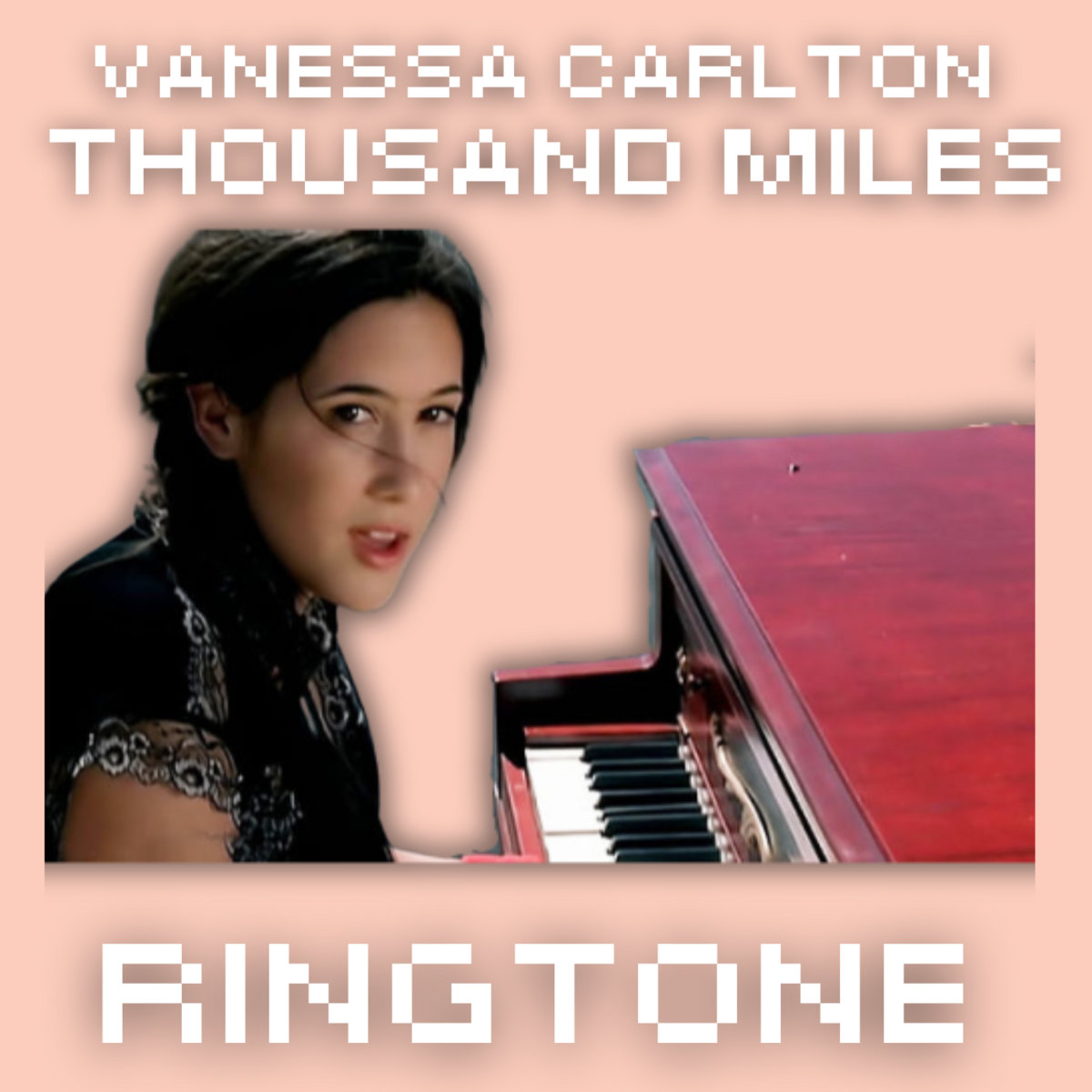
You know the sound. It’s those first three notes. They’re crisp, bright, and they immediately make you want to pretend you're playing a piano on a moving flatbed truck. Honestly, Vanessa Carlton probably had no idea that a riff she wrote in her parents' house at 17 would become the definitive anthem for early 2000s nostalgia. It’s been decades, but A Thousand Miles Vanessa Carlton remains a cultural heavyweight that refuses to go quietly into the "one-hit wonder" bin.
The Mystery Behind the Music
Most people think it’s just a sweet pop song about a crush. It kind of is, but it’s actually a bit more desperate than that. Vanessa has described it as a "combination of reality and fantasy." She was a student at the School of American Ballet, and she had a massive crush on a guy at Juilliard. She was too shy to ever actually talk to him.
Imagine that for a second. One of the most famous love songs of the 21st century is basically about a girl who was too nervous to say "hi" in the hallway. She once said she felt she had a "better chance of falling up" than ever having a relationship with him. That's where that famous lyric comes from.
For years, the internet has tried to guess who the "very famous actor" is. The Juilliard class list from that era is a goldmine: Glenn Howerton from It’s Always Sunny in Philadelphia, Anthony Mackie (Captain America himself), and Wes Bentley have all been floated as theories. Vanessa has never confirmed the name, and she probably never will. It keeps the magic alive, right?
The Song That Almost Didn't Happen
The track wasn't always called "A Thousand Miles." For a long time, its name was just "Interlude." Vanessa was incredibly stubborn about it. She didn't want the title to be something obvious.
Then she met Ron Fair, the head of A&M Records. He knew the song was a smash, but he also knew nobody was going to ask for "Interlude" on the radio. He basically had to pull rank to get the name changed. He told her, "Look, I'm the president of the label, we're not calling it 'Interlude.'" Eventually, Fair’s nephew suggested the title we all know today.
Why the Production Hits Different
- 14 Sessions: It took 14 separate sessions to get the recording right.
- The Orchestra: Ron Fair brought in a 60-piece orchestra. Most pop songs back then were leaning into synthesizers or heavy guitars (think Michelle Branch), but Vanessa went classical.
- Real Musicians: Leland Sklar played bass and Abe Laboriel Jr. was on drums. These are legendary session players, not just some MIDI tracks.
The Video: No Green Screens Here
We have to talk about the music video. In an era where every pop star was dancing in front of a green screen or a CGI futuristic city, Vanessa decided to literally travel. They built a custom dolly for her piano and bolted her to the bench with a seatbelt hidden under her skirt.
She spent two days being towed through the streets of Los Angeles and Newbury Park. It wasn't a trick. She was actually moving. That raw, "indie" energy is probably why the video didn't age as poorly as some of the high-gloss productions from 2002. It felt like she was actually going somewhere.
The "White Chicks" Effect and Rap Samples
If the song was a hit in 2002, it became a legend in 2004. We can’t talk about A Thousand Miles Vanessa Carlton without mentioning Terry Crews in White Chicks. That scene where he belts out the lyrics with pure, unadulterated joy changed everything. It took the song from being a "girly" pop track to a universal "jam" that transcended genres.
Even the rap world couldn't stay away.
You’ve got T.I. sampling it. Cam’ron used it for "10,000 Miles" in 2017. Vanessa actually loved Cam’ron’s version, calling the juxtaposition of her "pretty" piano with his "dark tale" something that totally worked.
It Was More Than a Pop Song
During the early days of the Iraq War, this song was actually the most requested track on British Forces Broadcasting Service radio in the Middle East. It’s sort of wild to think about, but the "longing and desperation" in the lyrics resonated with soldiers who were literally thousands of miles away from home.
It’s easy to dismiss it as "basic," a term that got attached to the song during the 2010s. But there’s a reason it stuck. It’s not just a simple melody; it’s a technically complex piece of music that manages to feel effortless.
Actionable Insights for the Music Fan
If you want to truly appreciate the legacy of this track, don't just leave it on your "2000s Throwback" playlist. Dig a little deeper into how it works.
- Listen for the layers: Pay attention to the string arrangement in the bridge. It’s not just background noise; it’s a full orchestral movement that drives the emotion.
- Check out Vanessa's later work: If you think she’s just a "pop" girl, listen to Liberman or Love Is An Art. She moved far away from Top 40 to make some really incredible, moody, indie-folk records.
- The Piano Technique: If you're a musician, try to play that riff. It’s in B Major and moves at 95 beats per minute. It’s harder than it sounds because of the syncopation between the left and right hand.
The song represents a specific moment in time when the "girl at a piano" was the biggest thing in the world. It’s a reminder that sometimes, the most enduring art comes from the things we’re too afraid to say out loud.